The fastest way to get testimonials is to ask at the moment a customer is happy, right after a purchase, a result, or positive feedback, and make responding effortless with a one-click link.
If you need a testimonial, simply contact the person. Tell them you value their feedback on your work or product, and ask if they would mind sharing their ideas in a testimonial. Do not forget to thank them.
If you want to collect testimonials, just keep it simple. People like being appreciated, and that makes them more likely to help out.
Why are testimonials important in business?
They’re pure gold for building trust. When you’re buying stuff online or signing up for a service, you check ratings and reviews before anything else, right?
That’s because testimonials tell new customers you’re trustworthy and legit. Happy customers are basically saying, “This place rocks!” That’s why collecting customer testimonials should be at the top of your list.
Why Testimonials Are Crucial
Because testimonials help to build trust, establish credibility, and serve as powerful social proof to convert potential customers.
Let me break it down. Imagine you’re at a party. Someone walks up and brags about how amazing they are. You’d probably zone out.
But if your friend starts talking about someone awesome they just met, you listen up, right? That’s testimonials for your business!
They’re not companies hyping themselves. Customer testimonials are genuine signs of trust. Client testimonials, from other businesses you’ve worked with, add another layer of credibility.
When your customers or potential clients are deciding between you and a competitor, your testimonials can be the reason they pick you.
When they see lots of positive feedback, they think, “These people must be doing something right.”
So, collecting testimonials isn’t just marketing fluff. It can seriously boost your credibility and sales.
10 Methods to Get Customer Testimonials 2026
We get two kinds of feedback: what’s working and what’s not. When we talk about different types of feedback, we’re obviously after the good stuff. Here’s how to start collecting testimonials today:
1. Post-purchase Surveys
Right after a sale, send a short and simple survey. Ask focused questions like, “How has our product or service helped you?” Short surveys get better replies and quicker customer testimonials.
2. Email Requests
Send a polite, friendly email asking for feedback. Something like, “We’d love to know what you think about your purchase!” More personal, and it works because customers feel special.
3. Social Media Outreach
Your customers hang out on Facebook and Instagram. Post regularly and invite feedback. Say stuff like, “Tell us how you’re enjoying our product!” It makes sharing easy and fun.
4. Website Forms
Add a quick testimonial form on your site. Ask for the basics: their name, email, what they bought, and a space to tell their story. Easy to use means you’ll collect testimonials anytime.
Place the form on:
- Your homepage
- Your pricing or services page
- A dedicated “Leave a Review” page
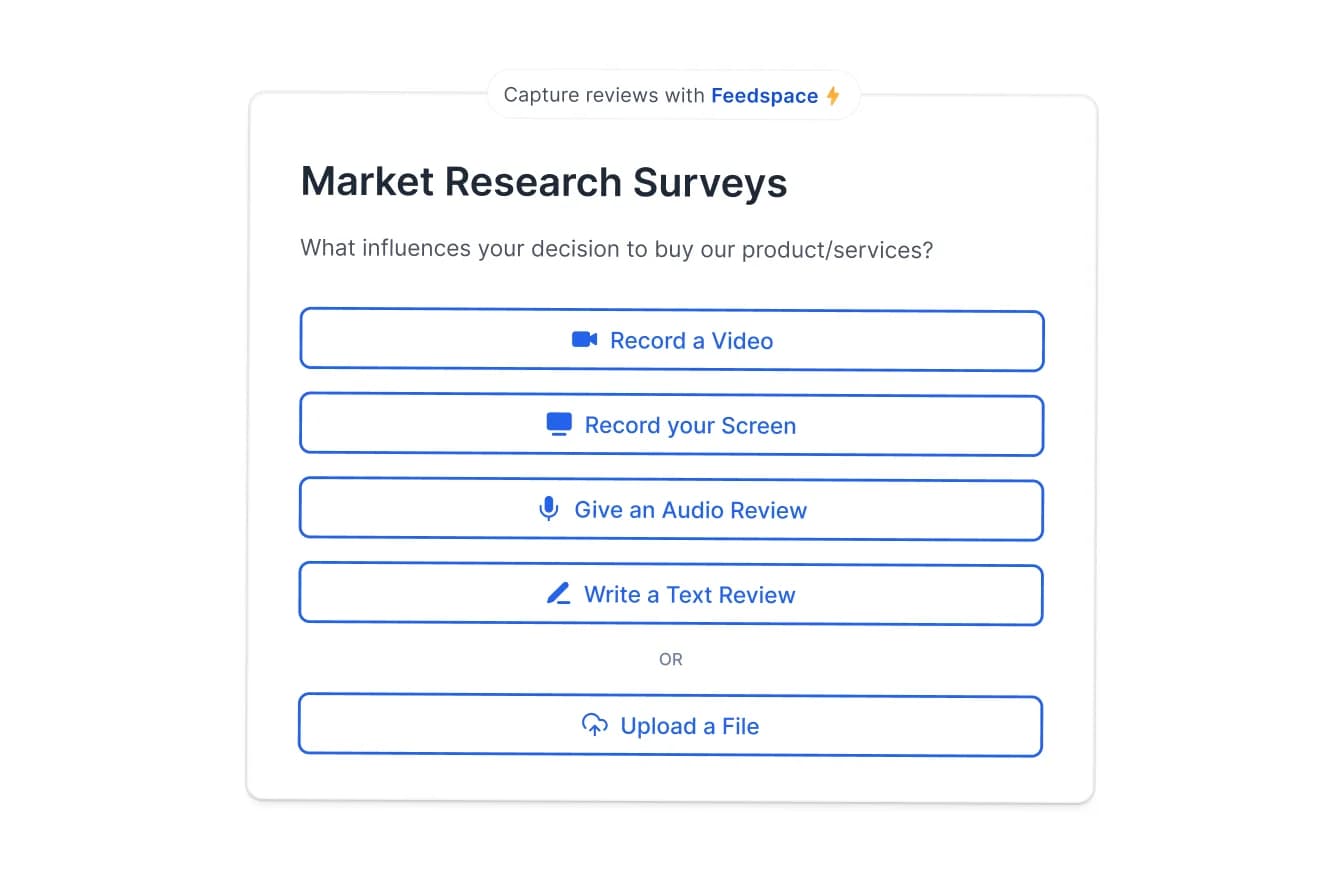
With Feedspace, you can build a custom testimonial form in minutes. It supports both written and video testimonials from the same link. Customers don’t need to create an account.
5. In-Person Requests
If you meet people face-to-face, just ask. “Would you mind sharing your thoughts about your experience?” Simple and direct. Most people are happy to help.
6. Incentivize Testimonials
Offer a little thank-you gift or discount. “Write a testimonial and get 10% off your next order!” Everyone loves a deal; it makes people more likely to share.
Good incentives include:
- Entry into a monthly giveaway
- A discount on their next order
- A free resource, template, or guide
- Early access to a new feature
7. Follow-Up Calls
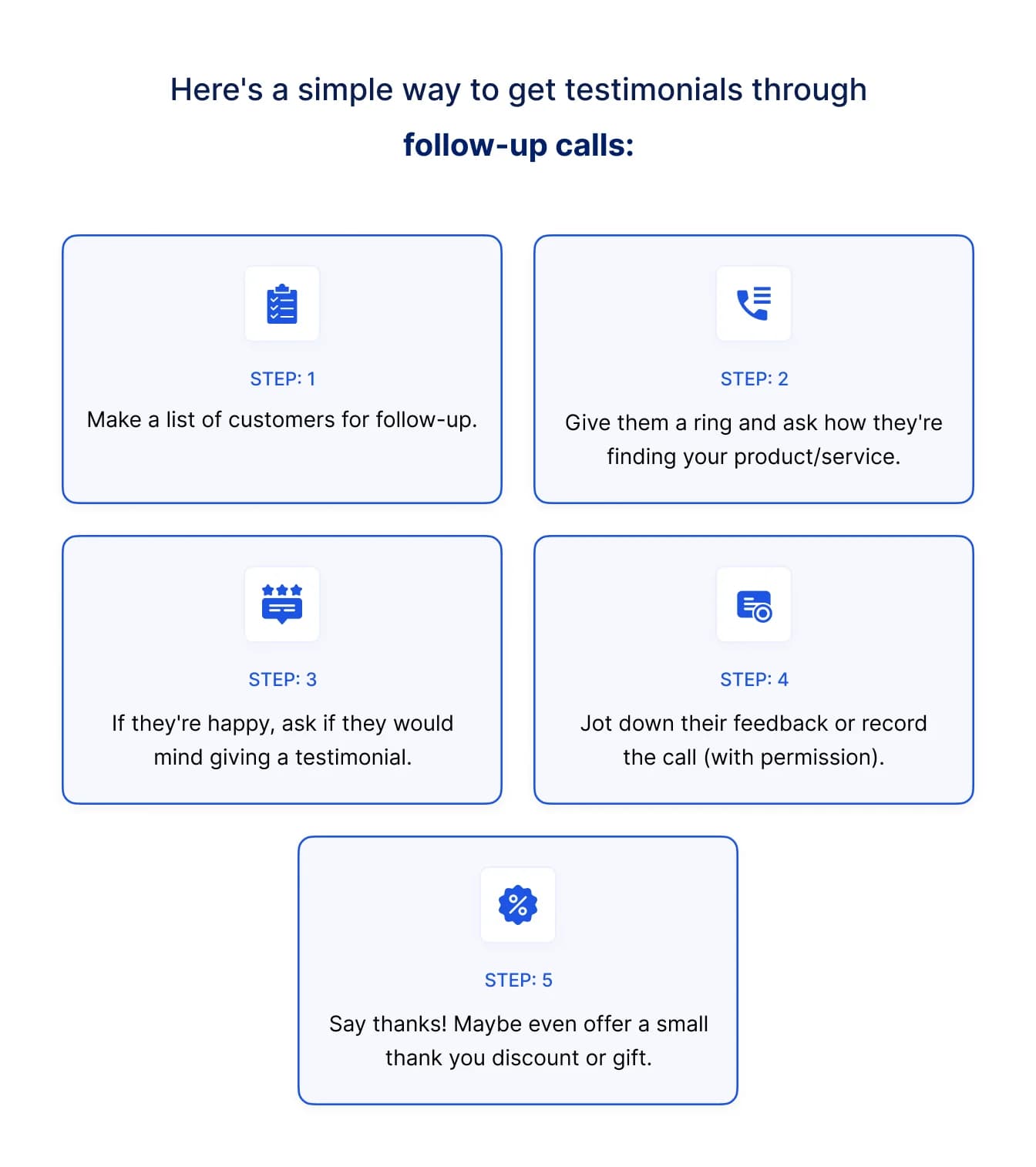
After someone buys from you, give them a quick call. Just check how they’re doing with the product or service. It’s a great way to show you care and get some honest feedback.
When you feel the timing is right, ask if you can share their words as a testimonial. These conversations often bring out thoughtful, real stories that really help your business.
8. Online Reviews
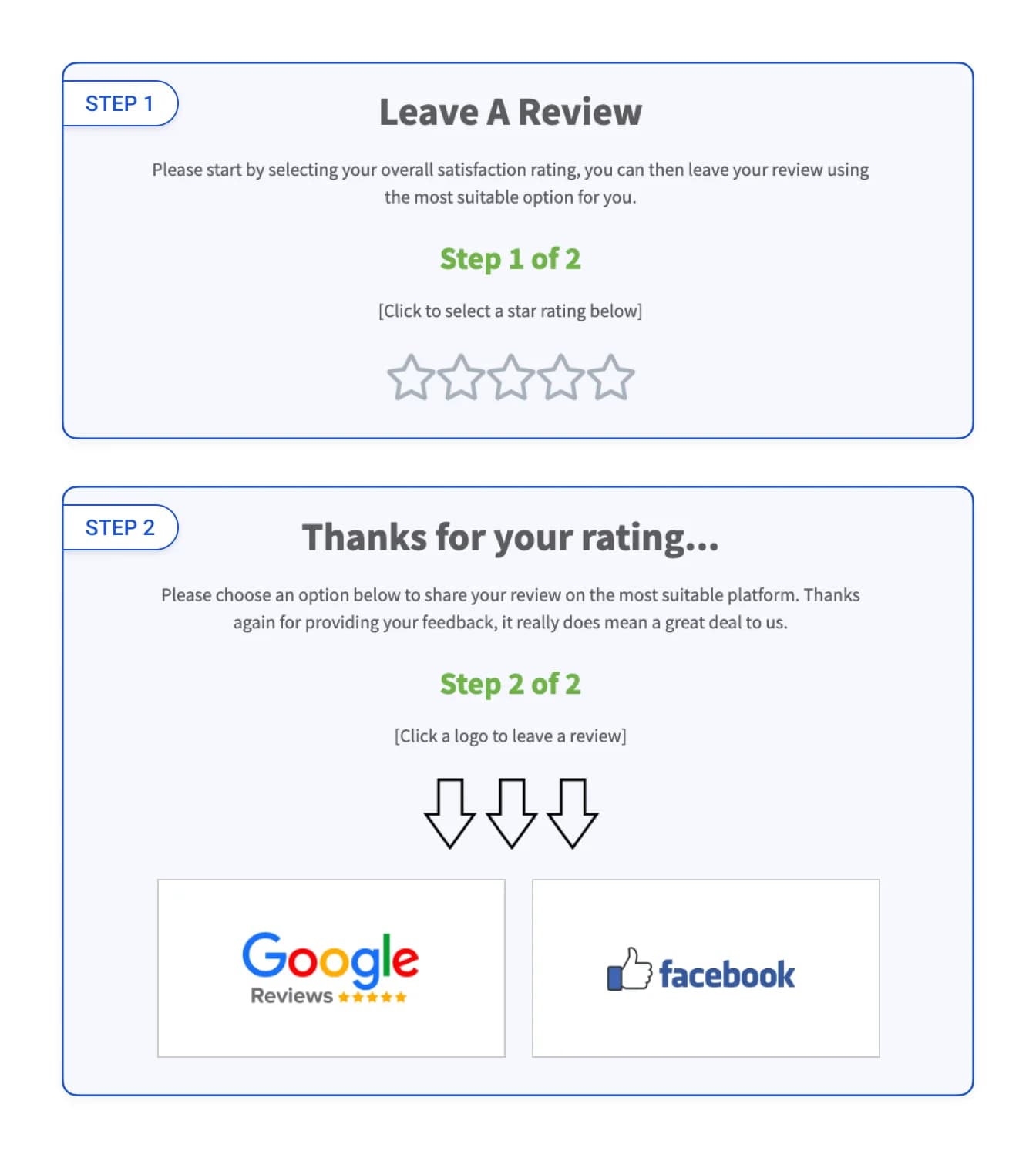
You know what works? Asking customers to drop reviews on places like Google Reviews and Facebook.
It’s simple: after someone has a positive experience, just send them a quick message saying, “Hey, if you’ve got a moment, could you leave us a review? It really helps!”
Make it super easy for them by giving a direct link or even a QR code so they can just scan it and go straight there.
9. Ask for Video Testimonials
Video testimonials are gold. When you ask customers to share a quick video testimonial about a product or service, it feels more personal. Seeing real faces and real voices builds way more trust.
Video converts 3x better than text testimonials alone. Give them questions in advance so they feel prepared. Never ask for a video on the spot without warning.
10. User-Generated Content Campaigns
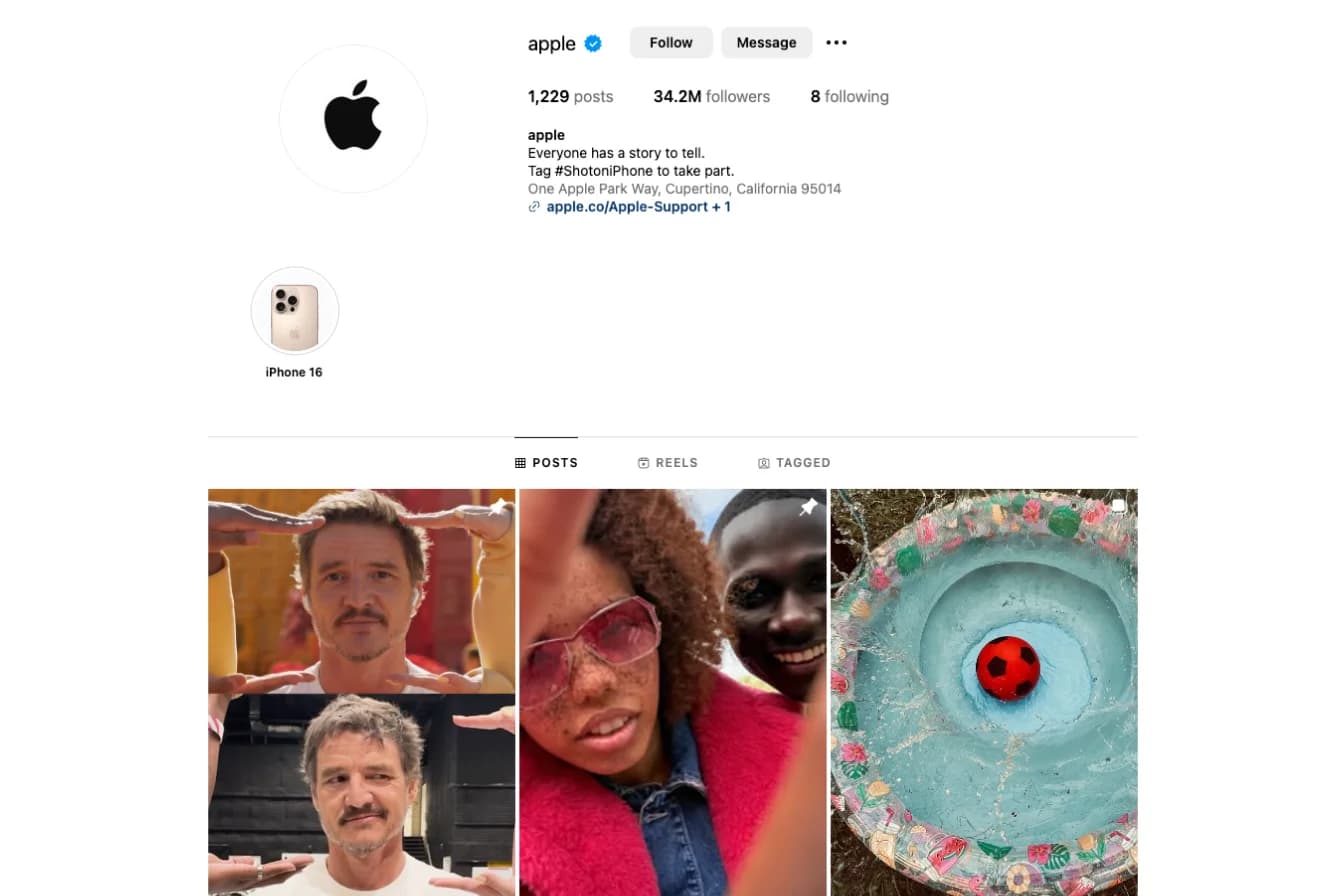
Big brands do this all the time because it works. When people post about your product in their own words and pictures, it’s like free advertising. And it feels honest, unlike an ad. If you want to collect testimonials anywhere, social media campaigns like this are a great way to start.
Conclusion
Testimonials are a huge deal for your business. The more natural and simple you make it, the more people will share their feedback. Mix and match these methods to collect testimonials wherever your customers are, online, in person, or on social media.
Want a hand making this happen at ease? Tools like Feedspace can help you collect and showcase these stories without any fuss. Try now.
FAQs
1. What are the best methods to collect customer testimonials?
The best methods include email requests, in-app prompts, post-purchase surveys, video testimonial tools, social media outreach, and review platforms. Using a mix of these methods ensures you collect both written and video testimonials consistently.
2. How do I ask customers for testimonials without sounding pushy?
Keep your request simple and personalized. Ask at the right time—like after a successful purchase or positive interaction—and explain how their feedback helps others. Offering an easy way to respond also increases chances of getting testimonials.
3. When is the right time to ask for a testimonial?
The best time is immediately after a customer has had a positive experience such as completing a purchase, achieving results with your product, or giving positive feedback. Timing plays a huge role in response rates.
4. Which type of testimonial works better: text or video?
Video testimonials are generally more impactful because they build trust through real emotions and authenticity. However, text testimonials are easier to collect and still valuable. Using both together creates stronger social proof.
5. How can I automate testimonial collection?
You can automate testimonial collection using email workflows, CRM triggers, and testimonial collection tools. Platforms like Feedspace allow you to collect, manage, and display testimonials automatically without manual follow-ups.